EN

6-Head UV DTF Printer, Running Live: Three Days Until Longgang
Booth C11–C13, Hall C · Longgang Modern Printing Port, Wenzhou · October 26–28, 2026
As of October 23, the Shenzhen Gifts Fair is closing its doors and the next show is three days out. Taotech Digital will run its 6-head UV DTF printer continuously at the 28th Cross-Strait (Longgang) Printing Industry Expo, October 26–28, at Booth C11–C13, Hall C.
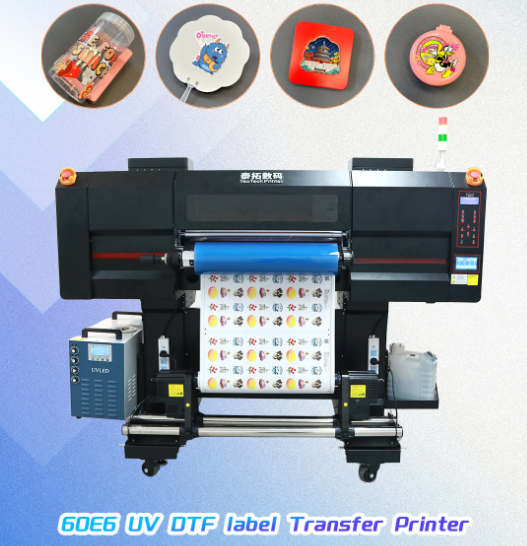
The machine on that stand is not a showroom unit. It is the configuration that handles volume work: six industrial Epson i3200 printheads, a rated speed of up to 30 m²/h, and a finish set broad enough that a job can change process mid-order without changing machines.
Why this particular week matters
There is a reason this article is dated rather than evergreen.
Late October is the last comfortable window to make a capacity decision before the year-end order wave. Buyers who commit now can have a machine installed, calibrated and running sample production before the Q4 peak arrives. Buyers who wait until January are not buying capacity for this season — they are buying it for the next one.
The same logic applies on the supply side. Factory schedules across the Pearl River Delta tighten through November and December, and installation slots fill earlier than order books do. Three days from now, the 6-head press will be running in Wenzhou where it can be judged in person rather than from a PDF.
A machine can be specified on paper in an afternoon. Whether it holds 30 m²/h for a full shift is something you can only decide by standing next to it.
What the 6-head UV DTF printer is actually for
Six heads is a deliberate position in the range, not a compromise.
A 4-head machine is the right answer for a workshop whose order profile is mixed and small: short runs, frequent artwork changes, one operator. Its economics come from flexibility, not from throughput.
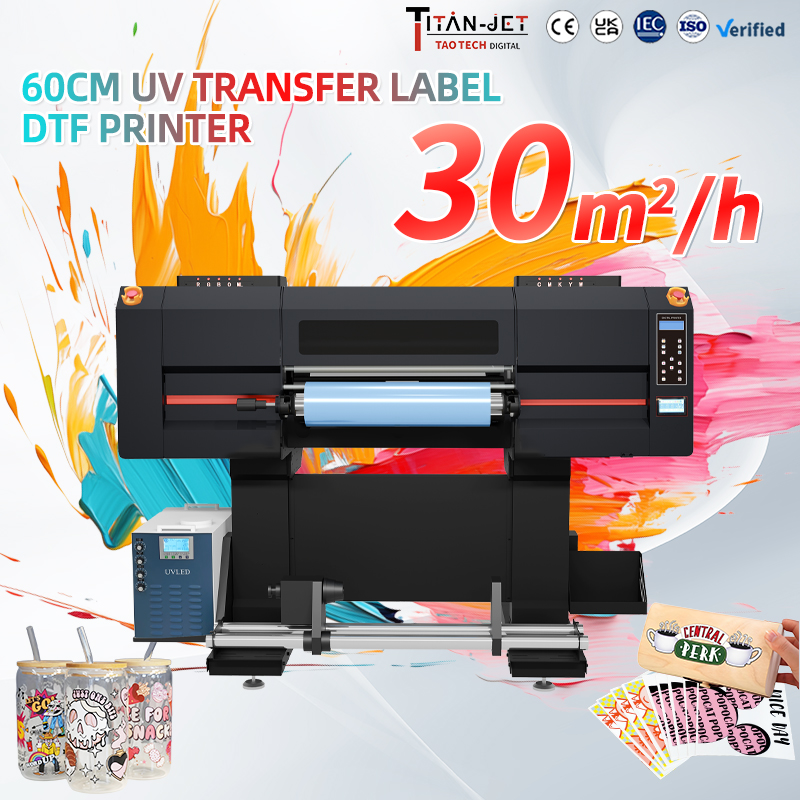
A 6-head machine is what a business buys when the constraint has moved. The order book is steady, the runs are longer, and the bottleneck is no longer the artwork or the customer — it is how many square metres come off the machine between shifts. Doubling head count at the same finish set is the direct answer to that.
Above that, an 8-head configuration exists for operations already running two shifts with work queued behind them. It solves a different problem — and it costs accordingly.
Most buyers who approach the stand at Longgang already know which of those three they are. The useful conversation is not about which machine is best; it is about which one matches the order book.
Where 30 m²/h comes from — and where it goes
The rated figure is up to 30 m²/h. It is worth being precise about what that number assumes, because throughput on a UV DTF line is decided by more than the head count.
Real output depends on the pass mode selected, the width of material actually being used, how densely the artwork is laid out on the sheet, and how quickly the operator can load and unload between runs. A shop printing wide, densely nested artwork will get closer to the rating. A shop printing small, sparsely spaced labels will not, and no machine will change that.
What the 6-head configuration does control is the part inside the machine: six heads laying down white, colour and varnish in fewer passes than a four-head unit, at a speed the platform can actually hold.
Stability at speed is a frame problem, not a head problem
Anyone can fit six printheads. Keeping registration tight while six heads travel at production speed is where machines separate.
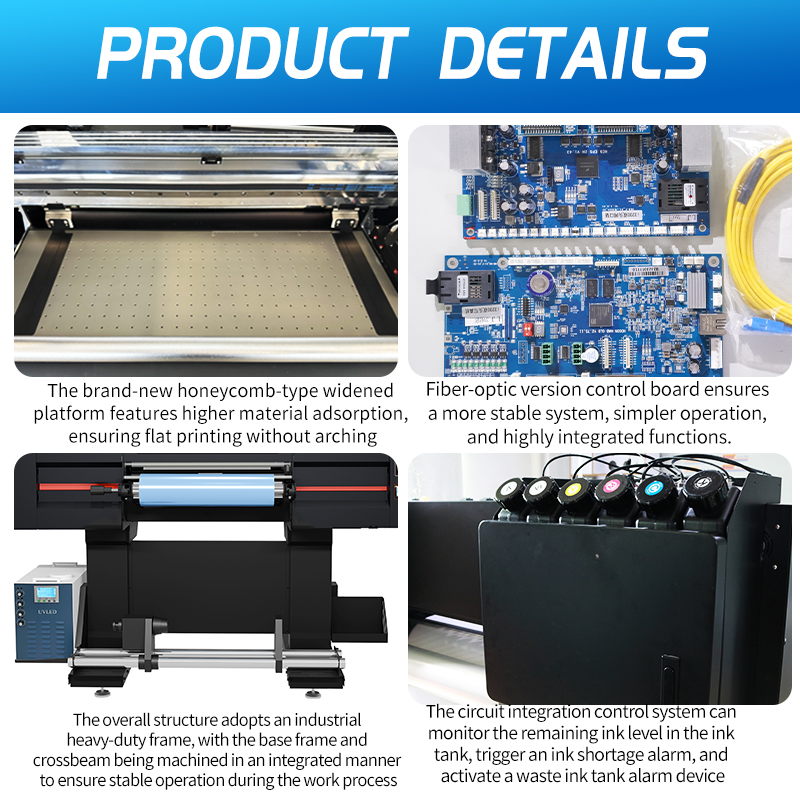
The 6-head UV DTF press uses a widened honeycomb platform. Honeycomb structure distributes vacuum more evenly across the bed than a channel-based platform, which matters most on thin and flexible substrates — the material stays flat instead of lifting at the edges as the carriage passes. Lift at the edge shows up later as banding or misregistration, usually on the jobs you least want to reprint.
The chassis is a heavy-duty one-piece frame rather than a bolted assembly. A one-piece frame flexes less, so the beam stays true when the carriage runs at full speed for hours. On a three-day trade stand running continuously, that is exactly the condition being demonstrated.
Six finishes, and where each one sells
AB film UV label. The standard crystal label. Gift boxes, bottles, tumblers, packaging front panels — the work most buyers already recognise.
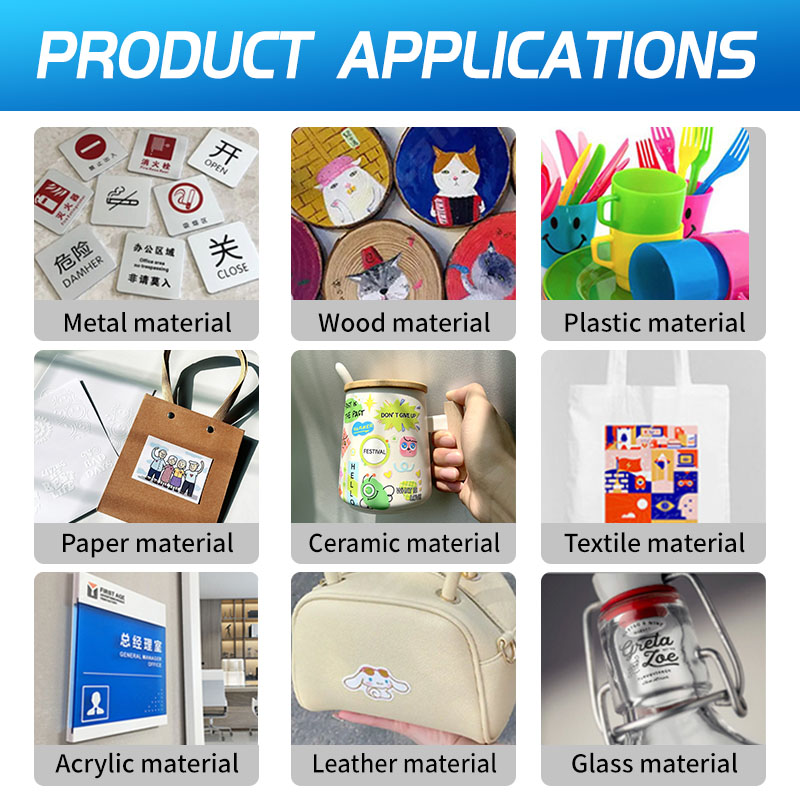
Partial foil. Metallic logo and lettering without a separate foil stamping machine. For packaging where the brand mark has to catch light.
Cold-transfer label. Applied at room temperature, which suits heat-sensitive and thin-wall products where a hot process would distort the substrate.
Thick label. A raised, tactile edge. Used on gift sets, apparel tags and streetwear decoration where the label is meant to be touched.
Embroidered-look. Textile visual on rigid goods — cushions, canvas bags, textile gift items — without embroidery equipment or lead time.
Domed epoxy-look. The raised gloss of an epoxy dome, printed rather than poured. Badges, keyrings, small promotional items.
Having all six on one machine changes how a shop quotes. A mixed order that used to be split across suppliers, or declined, becomes one production run with a file change in the middle.
Who should stop at Booth C11–C13
Three groups get the most out of a visit this week.
Printing and packaging plants adding a finishing capability. If UV DTF is currently outsourced, bring the sample you buy in. Printing the same artwork alongside it answers whether in-house production is good enough to sell — which is the only comparison that matters.
Label and sticker producers running near capacity. Bring your order profile: run length, changeover frequency, delivery windows. The right question is not "how fast is it" but "how much of my week does it remove".
Buyers planning a China sourcing trip. The show runs three days, sits roughly two hours by high-speed rail from Shanghai, and factory visits in Zhongshan can be arranged before or after it.
Practical information
Show: 28th Cross-Strait (Longgang) Printing Industry Expo.
Dates: October 26–28, 2026 — three days from the date of this article.
Venue: Longgang Modern Printing Port, Longgang, Wenzhou, Zhejiang, China.
Taotech stand: Booth C11–C13, Hall C.
Running on the stand: the 6-head UV DTF printer, plus a 4-head double-lamination press with integrated foil stamping for buyers whose question is about finish rather than volume.
On-site service: live sample printing on your own substrate, process consultation, and post-show sample submission for buyers who cannot travel.
About Taotech Digital
Taotech Digital Technology Co., LTD was founded in 2006 and has spent two decades developing and manufacturing digital inkjet printing equipment. The company is a National High-Tech Enterprise and a national-level "Little Giant" enterprise recognised for specialisation.
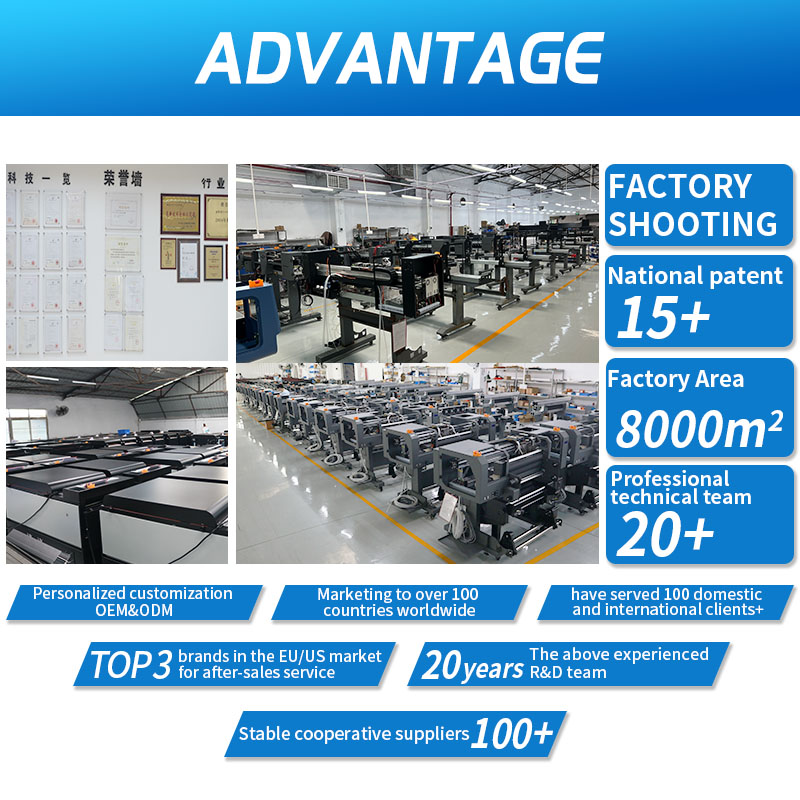
All machines use Epson-licensed printheads. Products hold EU CE safety certification and ISO9001 quality management certification, and are exported to more than 100 countries and regions.
Manufacturing is factory-direct, with R&D, assembly, calibration and quality control all in-house. Taotech also operates its own 10,000 m² crystal-label production workshop, where lines have run two shifts for more than three years at over 1,000 m² of daily output. Every model is validated on that line before release — the samples printed at a trade fair are production samples, not demonstration pieces.
Contact. Taotech Digital Technology Co., LTD. No. 6-2, Jinhua Zhong Road, Shalang, West District, Zhongshan, Guangdong, China. Tel +86-760-88667090. Web www.titanjetdtf.com. Email [email protected].