EN
EN
Three Days at W4-D33: What the A2 Thick Label Printer Made Possible — and the Factory Behind It
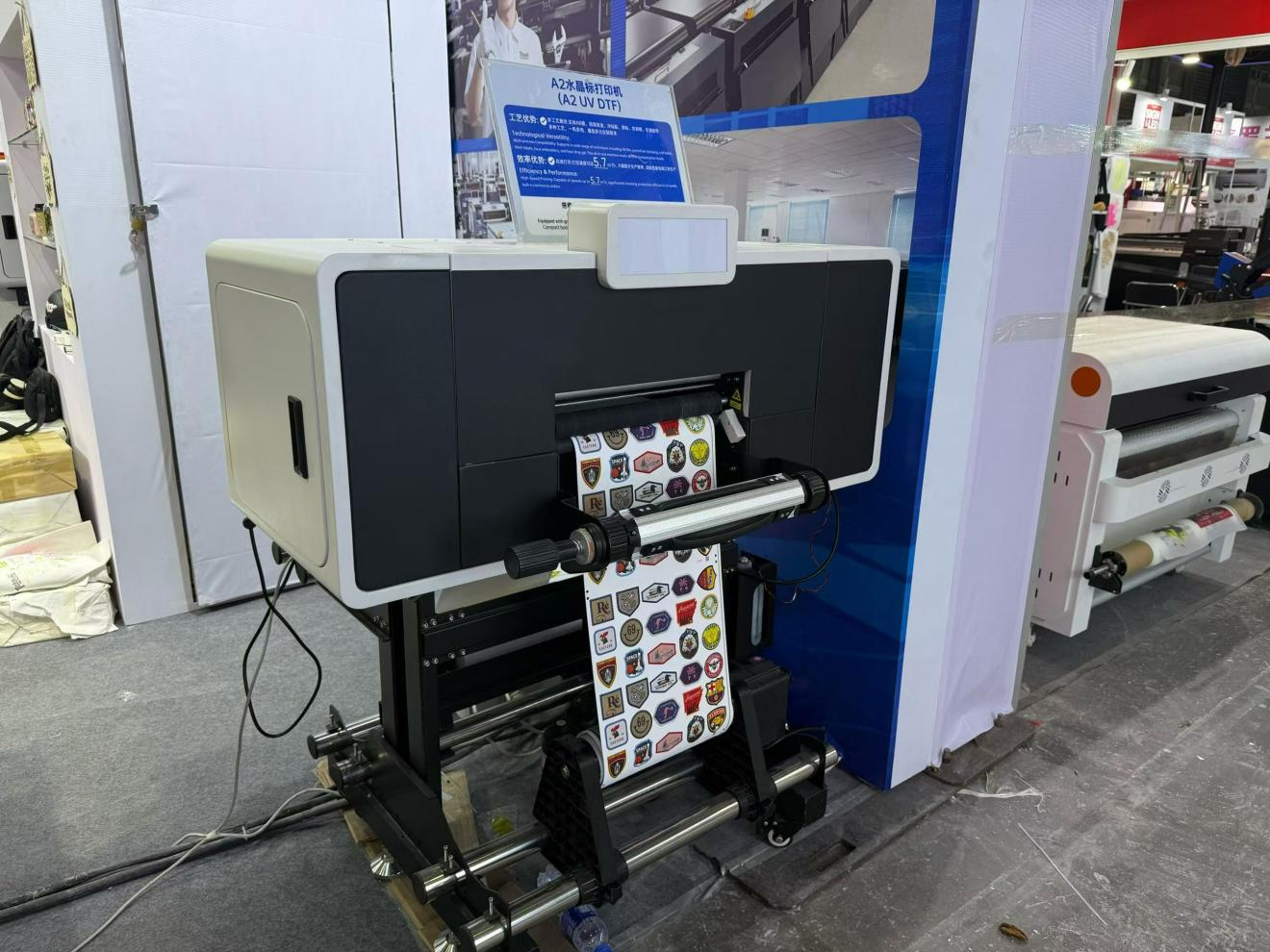
News recap, September 17, 2026. SIGN CHINA 2026 closed yesterday after its three-day run at the Shanghai New International Expo Centre. Taotech Digital held booth W4-D33 in Hall W4. Across the floor the company showed three product lines, but the conversation that kept repeating itself came back to one machine: the A2 thick label printer. This post is what happened at the booth, what the printer does, and — more importantly — what the factory behind the printer means for a buyer making a long-term decision.
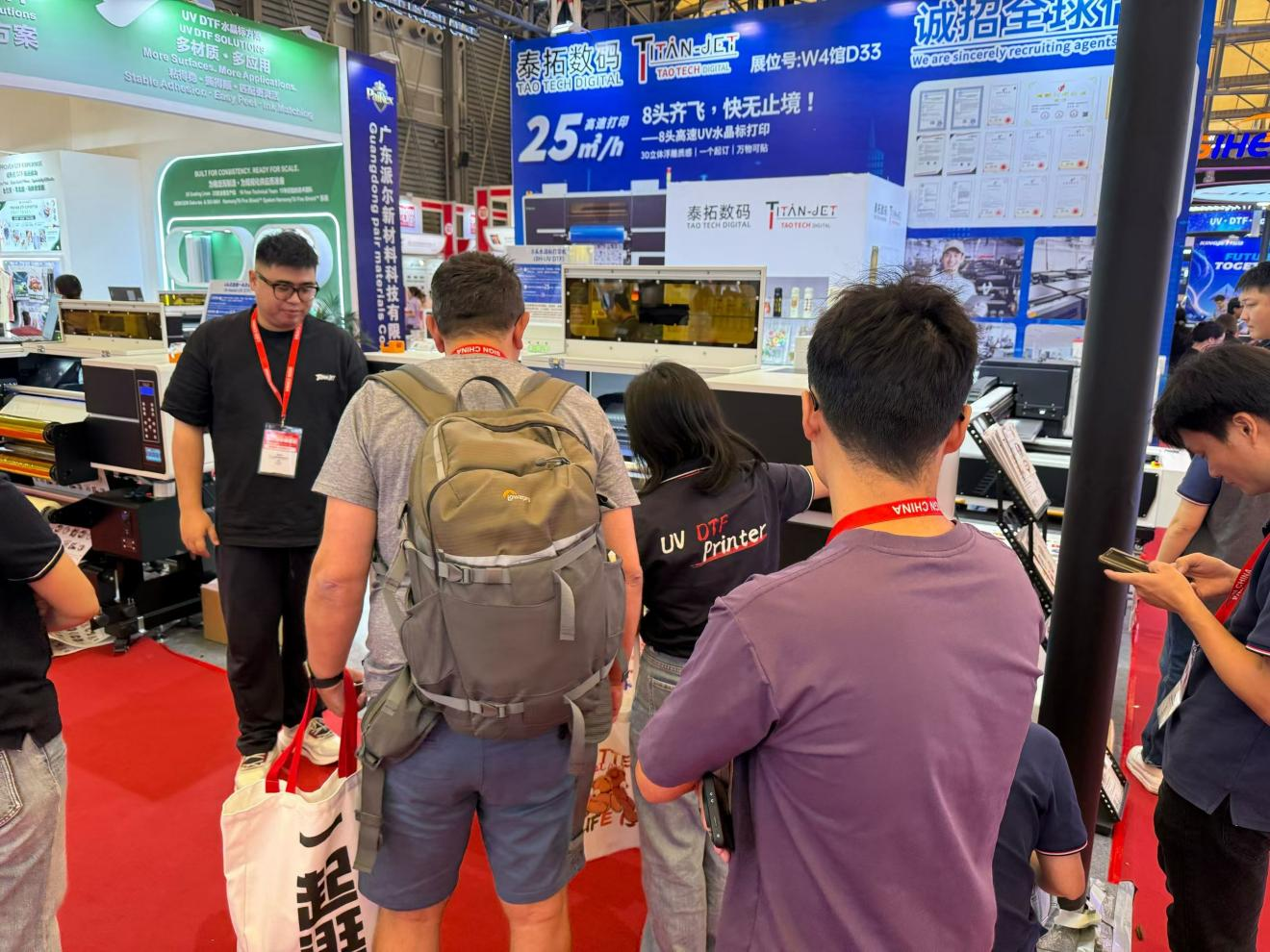
The question that came up over and over
Walk past any booth at a print equipment exhibition and you will hear four questions on repeat. At W4-D33 they were:
- How fast can I get from artwork to a press-ready sample?
- Can I do a single piece? Do I have to buy a mold?
- How does the finished label hold up after washing and wear?
- Who is actually behind this machine — a trading company, or a factory I can walk through?
The A2 thick label printer was the answer for the first three. The factory behind the booth was the answer for the fourth. Both matter.
What an "A2 thick label printer" is
A2 thick label printers are part of an independent category: digitally produced 3D silicone heat-transfer labels. The category sits alongside DTF white-ink heat transfer, UV-DTF UV labels, and UV flatbed direct print — and is the digital response to a process that, for decades, ran on steel molds and high-temperature vulcanization.
The traditional workflow — design, mold engraving, silicone pressing, hot-vulcanization — takes a week or more per design. Mold cost per new design runs from several thousand to tens of thousands of RMB. Minimum order quantities typically sit in the hundreds or thousands of pieces. That made the format workable for stable, high-volume work, and unworkable for short runs, fast design turnover, and personalized pieces.
Digital thick label printing changes the constraint set. With a machine like the A2 thick label printer, the artwork goes in, the printed TPU/PU film comes out, and the heat press does the rest — no mold, no vulcanization oven, no minimum order quantity.
The A2 thick label printer in plain language
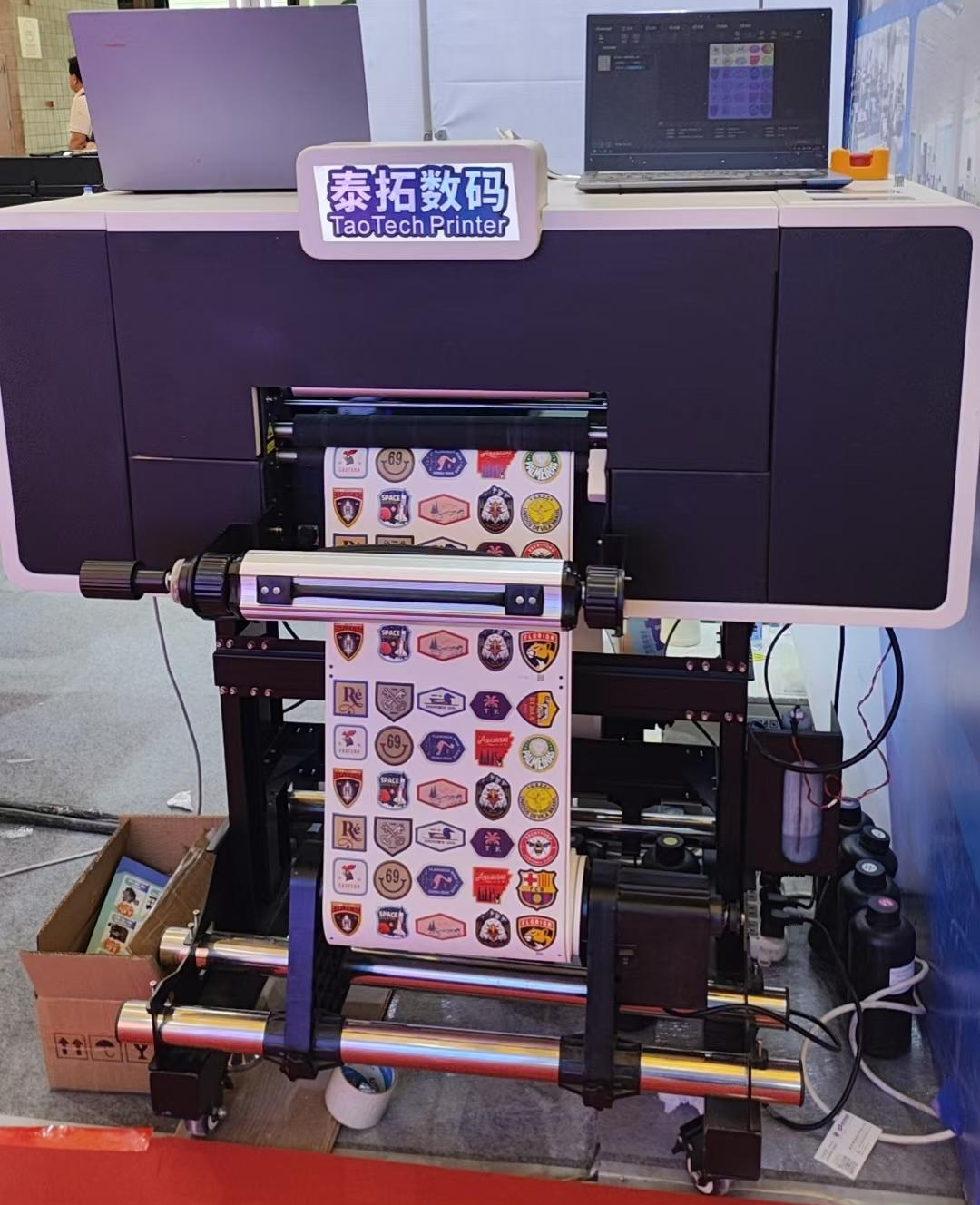
The A2 thick label printer runs four Epson-licensed i1600 industrial printheads. Across a 420 mm print width — 40% wider than A3 — those four heads lay down white, CMYK, and varnish in a single pass. The 12-pass mode runs at 1.2 m²/h, native resolution is 2400 DPI, and the ink configuration is CMYK + 2W + Varnish with UV ink at 450 ml per channel. The substrate is TPU or PU heat-transfer film. A white-ink agitation-and-circulation system keeps pigment suspended in the supply line and prevents nozzle clogging. The unit weighs 150 kg net, runs on single-phase 220 V at 700 W, ships with a Gigabit Ethernet interface and the Photoprint RIP, and operates on Windows 10 or above. The whole machine carries a one-year warranty.
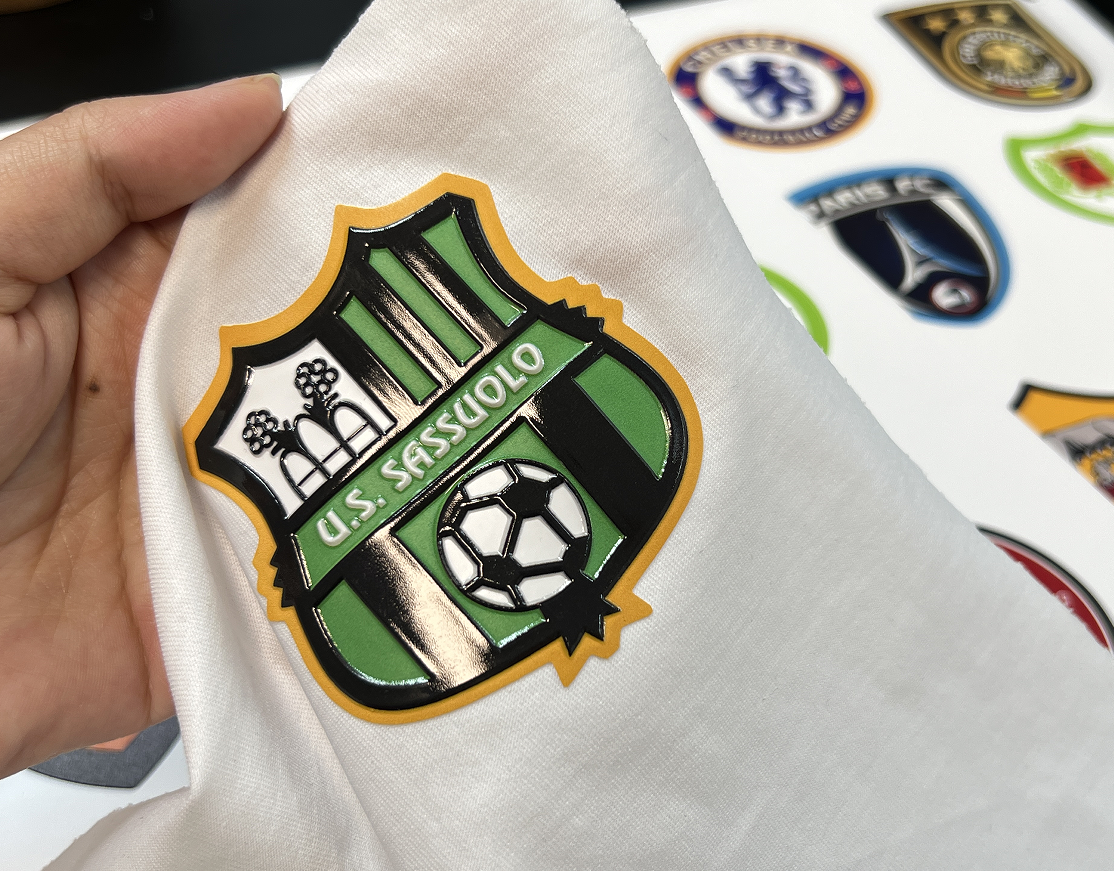
What that configuration gets you in plain English: not a throughput aimed at continuous bulk production — exactly the throughput needed for short runs of hundreds or low thousands of pieces, fast design turnover, and on-demand personalization. The printer is built to produce high-relief emboss, controllable from micro-relief to deep 3D; glossy or matte varnish finishes on the same pass; fine text and complex logos at 2400 DPI; gradient and brand-color-accurate prints; and wash-durable, flex-durable finishes after heat-press transfer.
Inside the factory behind the machine
For buyers, machine specifications are only half of the decision. The other half is the factory that builds it, services it, and stands behind it. Here is what is on the ground at Taotech.
Twenty years of specialization. Taotech Digital was founded in 2006. The company has spent two decades focused on the design and manufacture of industrial digital inkjet printing equipment. Every line in the current product range — UV flatbed, UV-DTF UV label, A2/A3 thick label, white-ink DTF heat-transfer — comes out of the same engineering team.
Direct-operated factory. R&D, production, calibration, and quality control are all in-house. There is no trading-company markup and no contract-manufacturer layer between the buyer and the assembly line. For OEM partners and dealers, this means specifications can be discussed with the engineering team directly.
Recognized credentials. Taotech is a National High-Tech Enterprise and a National-level Specialized and Sophisticated "Little Giant" Enterprise — a designation issued by China's Ministry of Industry and Information Technology for manufacturers that lead their category in innovation and supply-chain position.
Epson-licensed printheads on every machine. Every printer in the current lineup runs Epson-licensed printheads. The i1600 used in the A2 thick label printer is an industrial-grade printhead designed for high-precision, long-cycle production.
Global footprint. Products are exported to more than 100 countries and regions. The international sales team handles configuration, training, sample submission, and warranty service.
One-year whole-machine warranty. Standard for the A2 thick label printer. Warranty service is coordinated through the regional sales contact.
What this looks like in practice for an overseas buyer: when a question comes up — a printhead behaviour issue, a sample submitted for a non-standard material, a request for a configuration variant — it goes to the factory engineering team, not to a third-party distributor. The 150 kg crate that arrives at the warehouse was packed at the source.
What the A2 thick label printer changes about the order book
The printer changes the constraint on five points that buyers feel out on every order:
- New-design sampling. Traditional sampling waits on a new mold. A2 thick label printer sampling runs in hours at material cost only.
- Small-batch orders. Traditional minimums are in the hundreds or thousands. A2 thick label printer minimum is one piece. Unit cost scales smoothly from one piece to low-thousands.
- Design revisions. Traditional revisions need a new mold; costs accumulate every time. A2 thick label printer revisions reprint at no extra setup cost.
- Gradient and multi-color work. Molds restrict what is producible. Digital printing handles any gradient, any number of spot colors.
- Surface finish. Traditional work delivers a single gloss. A2 thick label printer produces glossy or matte in the same pass, with emboss depth controlled from micro-relief to high-relief.
Who the A2 thick label printer is built for
- Garment trim factories running stable high-volume business and looking to add small-batch and personalized lines
- Streetwear and limited-edition customization studios turning over designs weekly
- Sportswear, team-uniform and corporate-uniform suppliers running brand-logo and number-label work
- Cultural-and-creative product studios producing fabric-based personalized gifts and decorative pieces
- Individual entrepreneurs entering the thick-label customization market with a manageable capital outlay
What to do next
- For buyers evaluating the printer — datasheets, configuration comparison, and sample-print submissions can be requested through the contact email below. Send your artwork and substrate; the factory prints and returns the finished parts.
- For buyers evaluating the factory — on-site visits to the production line can be scheduled. R&D, assembly, calibration, and quality control are all in-house at the Taotech facility.
- For dealers and OEM partners — the 2027 regional representation programme is open for application. Contact the overseas sales team for the latest terms.
- For buyers who missed the booth at W4-D33 — the same machines are running in the showroom year-round.
About Taotech Digital
Taotech Digital was founded in 2006 and has spent two decades focused on the design and manufacture of digital printing equipment. The company is a National High-Tech Enterprise and a National-level Specialized and Sophisticated "Little Giant" Enterprise. Every machine in the current lineup runs Epson-licensed printheads. Products are exported to more than 100 countries and regions. The factory is directly operated — R&D, production, calibration, and quality control are all under one roof.